
Overview
Robotics AI Suite combines Intel-optimized robotics software, recommended hardware configurations, and integrated AI workflows to simplify Physical AI development from prototype to production. Build with ROS2 integrated tools, OpenVINO™ optimized pipelines, real-time control capabilities, and developer resources designed for Intel® Core™ and Intel® Core™ Ultra processors.
 Explore on GitHub
Latest News
Robotics AI Suite 2026.1
This release streamlines hardware set up with integrations for cameras, sensors, and devkits optimized for ROS 2 deployment. Now supports imitation learning and VLA training with the OpenVINO™ Physical AI Framework with Physical AI Studio as an end-to-end robotics training and fine-tuning workflows for VLA models delivering low-latency, low-jitter control loops and consistent heterogeneous acceleration on Intel® Core™ Ultra Series 3.
Learn MoreIntroducing Intel® Robotics
Computex, Taipei, Taiwan
At Computex 2026, Intel will announce the formation of Intel® Robotics. This new brand formalizes Intel’s commitment to delivering an open, edge-to-cloud software platform and compelling silicon that combines AI performance, deterministic control, and safety-ready compute to scale the next generation of physical AI across robots, the Edge, and the Cloud with the ecosystem.
Learn MoreStart Developing
Choose your path: start prototyping with Robotics AI Suite with our recommended developer kits, then move toward partner-supported systems when you are ready to deploy and scale.
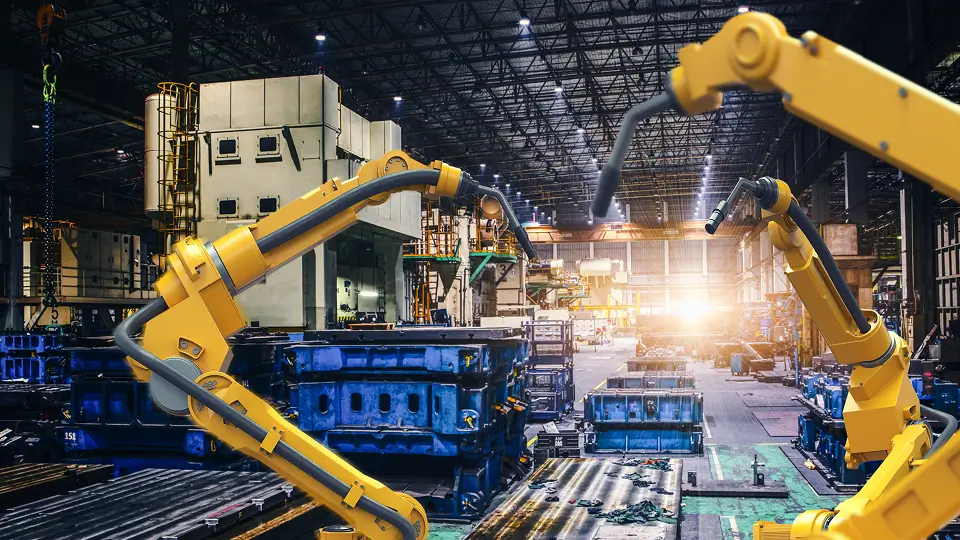
Develop
Explore Robotic AI and reference pipelines and optimized AI models to quickly evaluate robotics use cases on Intel® Core™ Ultra based development platforms.
- Autonomous Mobile Robots
- Stationary Robot Vision
- Humanoid – Imitation Learning
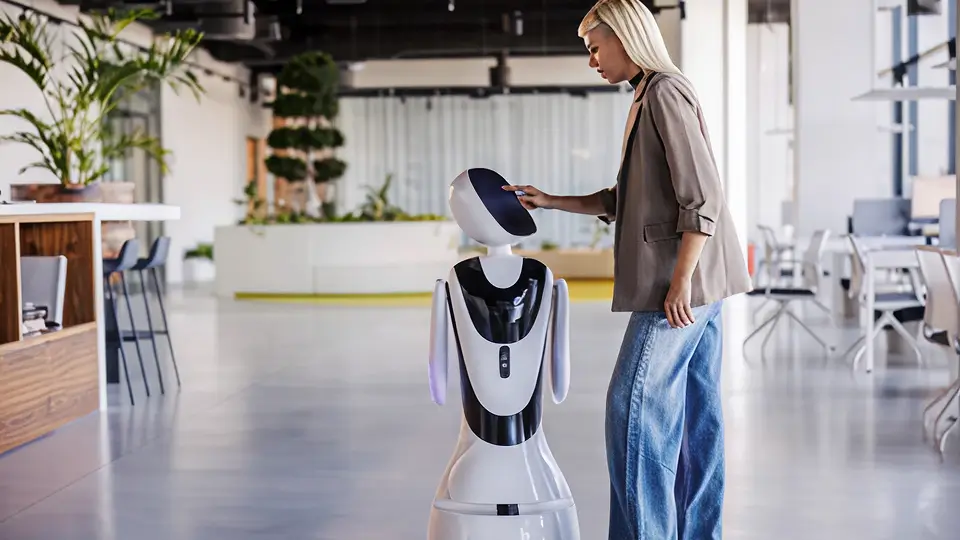
Deploy & Scale
Move from prototype to production with Intel-powered robotics systems and partner-supported deployment platforms designed for industrial robotics workloads.
- ODM/OEM robotics systems
- Industrial edge platforms
- Multi-camera support
- Rugged deployment options
Technology & Performance
Leverage Intel’s long-standing industrial robotics expertise, Edge AI systems powering your Robotic Intelligence to power real-time controls and AI acceleration on a single processor, and an open ecosystem to adapt next-generation robotics and scale physical AI-based robotics faster.
Advanced Compute
Intel delivers integrated, optimized hardware performance across a range of silicon form factors and systems to power AI acceleration with low-latency and scalability at the edge.
Intel® Robotics
Shift from determinist to autonomous platforms and from specialized to generalized form factors / capabilities to enable Physical AI powered robots to perceive, reason, and act in the real world.
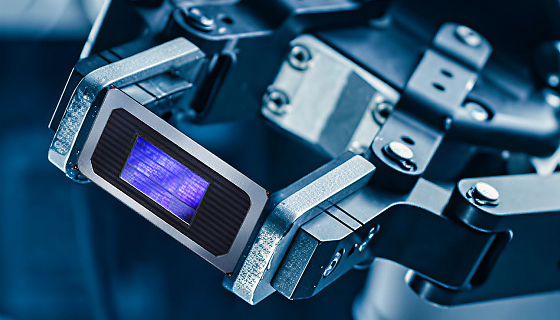
Intel® Core™ Ultra Series 3
Power both real-time performance and AI acceleration on Intel® Core™ Ultra Series 2 and Series 3 processors to deliver efficiency and cost savings.
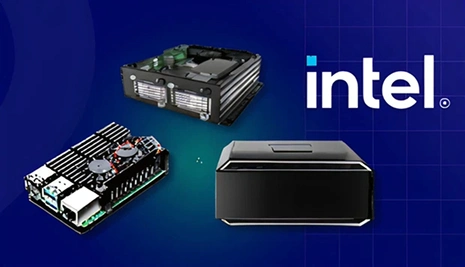
Physical AI DevKits
Intel® Core™ Ultra Series 3 platforms deliver a reduced-complexity, low-power hardware stack purpose-built for real-time industrial and robotics workloads. With integrated compute, deterministic control, and rich connectivity in compact, rugged designs, they help customers streamline integration, improve reliability, and scale edge AI deployments faster.
Build with an open ecosystem
Intel integrates across a broad ecosystem of hardware partners to enable freedom of choice and flexibility for building robots with best-known hardware configurations for cameras, sensors, and hardware connectivity to enable rugged, long-lasting performance.
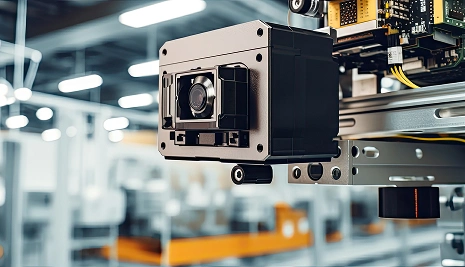
Camera and Sensor Integration
With support for high-speed image data transfer technologies like GMSL, robot builders have high bandwidth to capture high-resolution video and images with integrations for a wide range of camera types from partners.
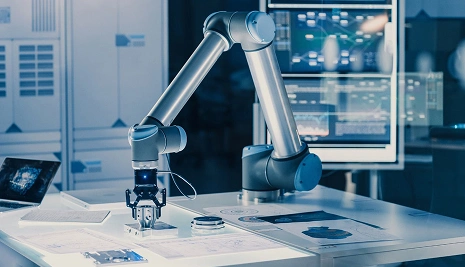
Controllers and actuators
Intel’s robotics platform supports many types of actuators including motors and servo-drives to control heavy duty and light weight robotic arms, wheeled platforms, and end effectors for gripping, picking, and placing.

Fast Connectivity
Leveraging industry-standard industrial automation protocols for high speed and low latency, like EtherCAT and CANopen, Intel’s hardware configuration supports high precision, high-speed connectivity and device interoperability for cost-effective device integration.
Robotics Control Recipes
Extend real time performance with repeatable efficiencies for predictable, scalable, and adaptable performance and real time control across rugged industrial deployments at the edge.

Intel Time Sensitive Networking
Optimized network and ethernet controls streamline robot operations for efficiency and low latency.
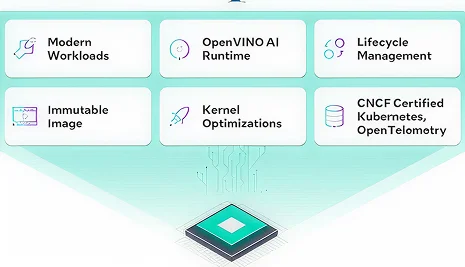
Intel Time Coordinated Computing (TCC)
A processor technology that prioritizes workloads to optimize performance for time-sensitive, real-time applications to reduce jitter, improve determinism, and synchronize tasks with microsecond-accuracy.
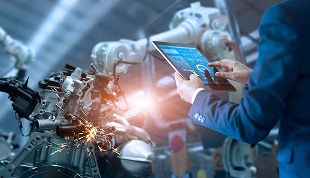
Closed-loop Control
Sync AI perception and motion control to reduce latency with closed-loop controls. Combining specialized hardware, real-time software, and AI optimization for edge commuting, intel accelerates the entire control loop from sensor input and perception to decision-making and motor control.
Virtualization and Application Management
Right-size robotics solutions to ensure scalability, compatibility, and performance tuned for physical AI workloads, and suitable to scale industrial robotics operations.
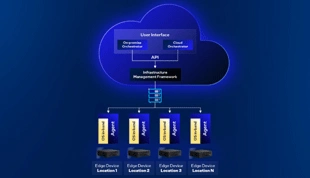
Real-time controls, manageability and deployment
Enable containerized and virtualized applications in edge deployments to process AI pipelines with speed and efficiency on CPU, NPU, and iGPU.
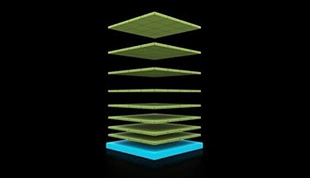
Intel® ACRN
A lightweight hypervisor used in Autonomous Mobile Robotss (AMRs) to consolidate multiple operating systems and workloads onto a single computing platform. It uses virtualization to securely and reliably run a mix of critical real-time tasks (like navigation) and general-purpose workloads (like AI) on the same hardware.

Kernel-based Virtual Machine
Intel brings special features for Kernel-based Virtual Machine to consolidate compute-intensive tasks to ensure real-time performance and robust remote management for edge devices and reduce latency.
Evaluation, qualification, and benchmarking
Deploy and scale robotics applications with near zero-touch deployment and enable remote management to quickly evaluate AI workloads using performance monitoring, repeatable benchmarks, and optimization tools to ensure efficiency and optimized performance.
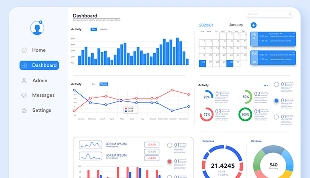
Visual Pipeline and Performance Evaluation Tool (ViPPET)
Evaluate hardware for AI workloads to benchmark CPU frequency, GPU power usage, memory use, and temperature with hardware-aware tuning to fine-tune performance.

Device Qualification and Benchmark Tool
Verify acceleration and compute to qualify “best known” AI+ media pipeline configurations to confirm reliability, up-time, power, and memory efficiency.
Validation Framework
Observe best case scenarios using telemetry data to compare OpenVINO™ benchmarks, media performance, video pipeline, Memory, GPU AI frequencies. Use the Robotics AI Suite reference applications and OTX validation framework to evaluate trained models on dedicated validation data sets to assess model quality and capabilities to achieve desired performance outcomes.
Use Cases
Accelerate robotics development with demos, reference applications, tutorials, and AI workflows for common robotics tasks across mobile, industrial, humanoid, and Physical AI use cases.
Build AMR workflows for navigation, SLAM, mapping, planning, and perception with ROS 2 integrated reference applications.
GroundFloor Segmentation
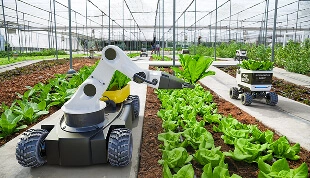
A demo segmenting depth sensor data using LiDAR and RealSense camera inputs to render a 3D point cloud to address non-flat floors, ramps, inclines, and other challenging conditions.
ITS-Planner
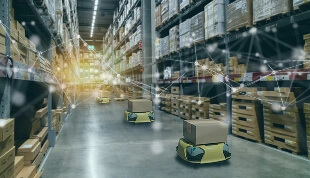
ROS 2 plug-in to enable global path planning based on intelligent sampling and 2-way search to reduce compute time to reach robot about its position in a grid map and where it’s headed.
Simulation
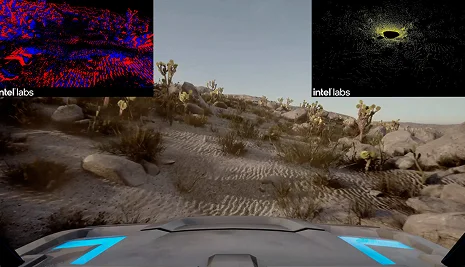
Tutorials that show how to use the ROS 2 simulations with Intel® Robotics AI Dev Kit. Robot sensing and navigation can be tested in these simulated environments.
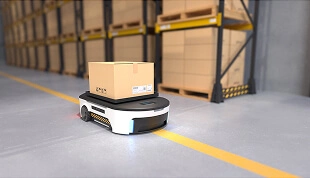
Wandering
A ROS 2 compatible reference application to use with different SLAM libraries to move robots around in an unknown environment to create a navigation map of the environment.
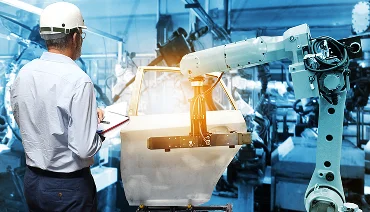
Robot Motion Control Task
A comprehensive C++ library for developing robot motion control tasks, with APIs for building sophisticated physical AI applications integrated with AI inference engines and EtherCAT protocol support.
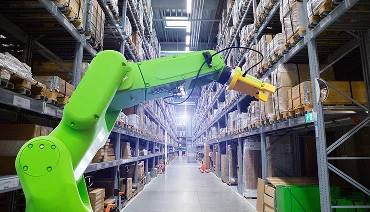
FastMapping Algorithm
An AMR tutorial for running an Intel® optimized version of Octomap for enabling route planning simulation.

ADBSCAN Algorithm
A highly adaptive and scalable object detection and localization algorithm tested to detect Lidar and RealSense Depth Cameras to automatically compute clustering parameters.
Develop pick-and-place, track-and-place, motion control, and manipulation workflows for industrial robotics applications.
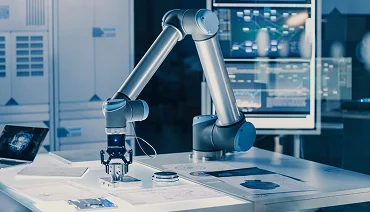
Robot Vision and Control Framework (Intel® RVC)
Robot Vision and Control is a robotic software framework aimed at tackling pick-and-place and track-and-place industrial problems.
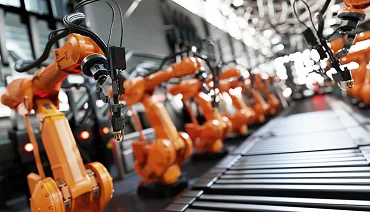
Model Predictive Control (MPC) Demo
Use dynamic linear model defined by edge data to optimize control actions around system constraints to adapt behavior to anticipate future events, addressing action timing, jerky trajectories, and collision risks.
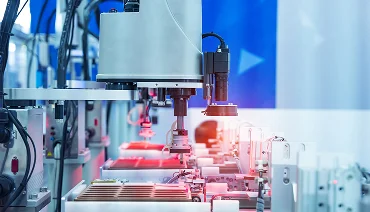
Robotics Control Recipes
C++ libraries for adding real-time capabilities to the kernel with patch and boot parameters for real-time optimization that increase predictability and reduce latency.
Explore imitation learning, task planning, VLA and VLM workflows, and multimodal AI models for embodied intelligence.

Action Chunking with Transformers
An end-to-end imitation learning model designed for fine robotics manipulation tasks, learned from human actions and demos to avoid errors and predict actions in chunks. It reduces training time while increasing success rates.
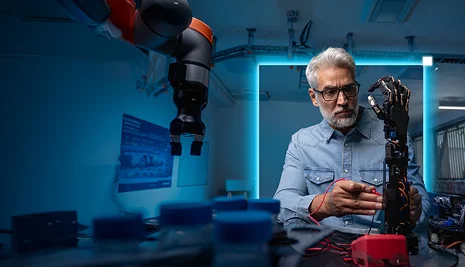
LLM Task Planning Demo
Facilitate robot chatbot interaction using LLMs, Vision AI, and a user’s voice to prompt robot agentic AI with text commands that generate actions.
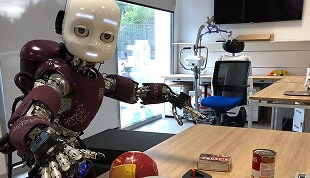
Robotics Diffusion Transformer
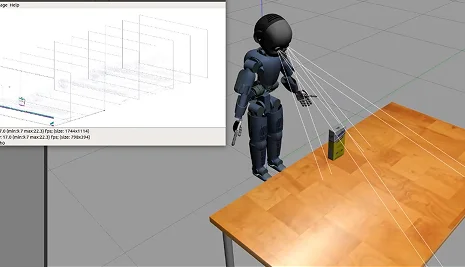
This pipeline enables bi-manual manipulation by processing multimodal inputs to generate robot action sequences with time series analytics and VLA models for physical environment and simulation tasks.
VSLAM: ORB-SLAM3
A real-time, feature-based SLAM library for visual mapping that captures multi-camera and sensor inputs to sense the surrounding environment and maximize pose reliability and prediction accuracy.
Use OpenVINO™ optimized models, transformers, diffusion models, and GenAI workflows to add perception, reasoning, and action to robotics applications.

Vision AI Models
Allow robots to perform complex manipulations like picking, placing, and assembly with Vision AI for object detection, classification, and mapping with precise, real-time control.

LLM, VLM, VLA and GenAI Models
Enable robots to interpret and act in their environment by combining visual input with natural language understanding to generate and execute physical actions. Use the Pi0.5 OpenVINO™ tutorial to support VLA tasks with relevant semantic subtasks.
Diffusion and Transformer Models
Diffusion policy and transformer-based models improve robot manipulation by using Action Chunking with Transformers to predict sequences of actions from observations and language instructions.
Developer Tools
Accelerate development with tools and tutorials to enable robot solutions with advanced Vision AI, spatial intelligence, and optimizations and transformers for AI model inference.
Build and optimize embodied intelligence models and workflows with tools to optimize performance on Intel.
OpenVINO™ Physical AI Framework
The OpenVINO™ Physical AI Framework provides a pre-optimized, extensible software layer so robotics developers can move faster, reuse more, and deploy with greater consistency across all types of robots and Physical AI compute targets.
Physical AI Studio
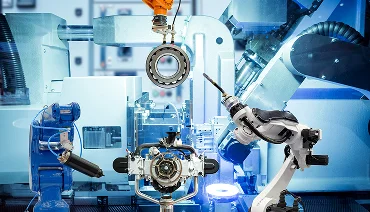
Enables end-to-end VLA workflows across robot calibration, data collection, and policy training (ACT, Pi0, SmolVLA), to support imitation and reinforcement learning, optimized for fast performance on Intel.
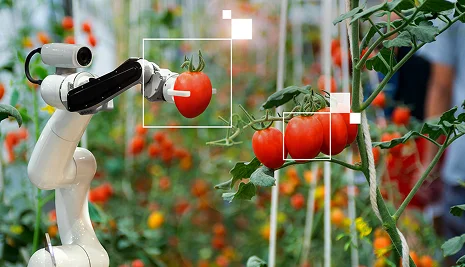
Geti™ Computer Vision Models
Simplify and accelerate computer vision model training with an intuitive end-to-end seamless workflow. Optimize models for speed and fine grained precision to detect objects and key points for pose estimation.

SceneScape
Create dynamic 4D digital twins of real-world environments using data from various sensors to inform situational awareness and robotic perception.
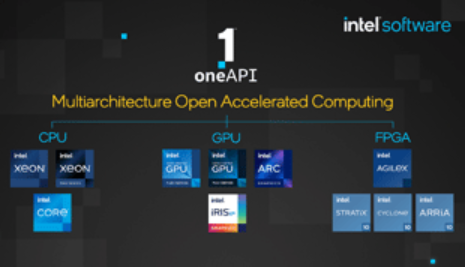
Intel® oneAPI
A unified programming model that enables developers to write code that can be executed on a variety of hardware accelerators.
Get advice for arranging heterogeneous computing, and models used for embodied intelligence with helpful tutorials
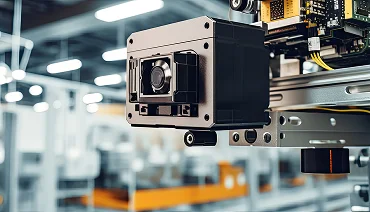
GMSL Camera Tutorial
With lower power consumption and lower latency, GMSL supports fast data transmission over a single coaxial cable. This tutorial demonstrates how GMSL can be enabled with ecosystem partner products on Intel® Core™ Ultra Series 2 processors.

Heterogeneous Computing
Learn about the various software workloads integrated to enable autonomous systems to perform complex tasks in dynamic edge environments.
AI Model Tutorials
Discover deep learning models commonly used in embodied intelligence solutions and how to run them on Intel platforms complete with benchmarks and Jupyter notebooks.
Developer Resources
Get started with Robotics AI Suite using GitHub, documentation, setup guides, tutorials, and reference applications for building Physical AI and robotics solutions on Intel hardware.
Follow guided setup resources for AMR, RVC, humanoid imitation learning, and recommended hardware configurations.
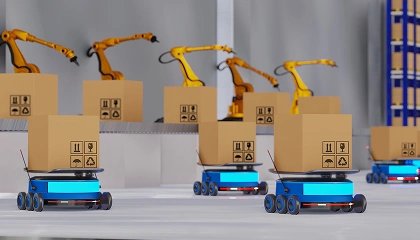
Autonomous Mobile Robots
Based on ROS 2, the Autonomous Mobile Robots software packages and pre-validated hardware modules feature capabilities for senser data ingestion, classification, modeling, action planning and control.
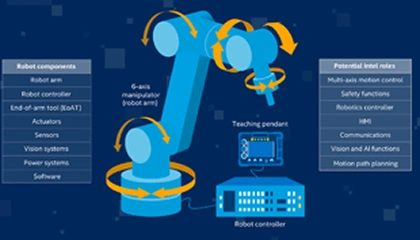
Robot Vision and Control Framework (RVC)
Centered around motion control the RVC eases pick and place operations for advanced manipulation tasks with support for identification, grasping, and relocation of items.
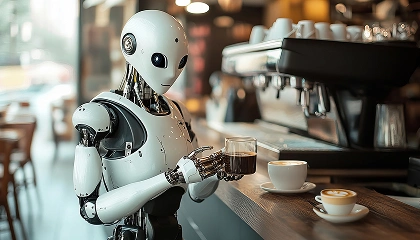
Humanoid-Imitation Learning
Designed to streamline the development of embodied intelligence applications on intel with comprehensive Action Chunking with Transformers demo.
Access the repository, install instructions, release notes, and developer documentation for Robotics AI Suite.
Review solution briefs, case studies, and technical papers for performance, deployment, and system architecture guidance.
Scaling Physical AI
We are living through a transformational era in robotics—a shift from traditional automation to intelligent systems that understand, adapt, and collaborate. Robotics is no longer just about repetitive tasks...
Trossen Uses Intel Technology for Powerful AI/ML Workstation
Developing AI/ML models requires an investment in extreme compute power. For models that need low latency and data privacy, the TOTL Workstation supports robotics at the edge.
Explore technical perspectives, product updates, and demonstrations that show how Intel supports robotics and Physical AI development.

Simplify Physical AI Development with Intel’s Robotics AI Suite
Level the playing field with physical AI at the edge and simplify the journey to develop, deploy, and scale robotics with Intel’s Robotics AI Suite.
Developers Shortcut to Smarter Robots with Intel’s Robotics AI Suite
Take the complexity out of setting up and training physical AI on Intel with the Robotics AI Suite to enhance functions for perception, locomotion, manipulation, and imitation learning.
Announcing the Open Edge Platform 2026.0 Release
Get under the hood of the latest Open Edge Platform release to learn more about the latest Geti, Scenescape, and DL Streamer updates that accelerate Vision AI, media analytics pipelines, and Gen AI.
Vision AI on Geti™ accelerated with Arc™ B-Series GPU enables robotics test automation
Learn how Intel Foundry uses Geti and Intel Iris to scale efficiency and accuracy for automated testing to reduce down time, increasing quality, and accelerate and throughput.
TAIROS 2025 Asia's Premier Roboticstics Show
TAIROS 2025 Asia's Premier Roboticstics Show...
Robotics at the Edge: Where AI Meets Real-World Automation
Robotics is emerging as a powerful proving ground for AI. Discover how OpenVINO™ accelerates AI inference and performance, power efficiency requirements that enable real-time decision-making.
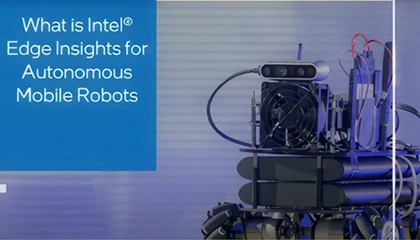
Edge Insights for AMRs
Intel’s Rajesh Kurusetty explains the components available for developing Ambulatory Mobile Robots with Intel software and hardware components.

Connect with Us
Have questions about Robotics AI Suite, development kits, recommended configurations, or deployment systems? Connect with Intel to find the right starting point for your robotics project.
Contact UsSubscribe To Our Newsletter
Subscribe to the newsletter for the latest updates on materials posted on the Intel Industry Solution Builders program.
By submitting this form, you are confirming you are an adult 18 years or older and you agree to share your personal information with Intel to use for this business request. You also agree to subscribe to stay connected to the latest Intel technologies and industry trends by email and telephone. You may unsubscribe at any time. Intel’s websites and communications are subject to our Privacy Notice and Terms of Use.
By submitting this form, you are confirming you are an adult (18 years or older) and you agree to share your personal information with Intel to use for this business request. You also agree to subscribe to stay connected to the latest Intel technologies and industry trends by email. You may unsubscribe at any time. Intel’s websites and communications are subject to our Privacy Notice and Terms of Use.